
I never knew that Mr. Potato Head had a pal named “Pete The Pepper”.

With a name like “Pete The Pepper”, it seems possible that this “friend” may have been one of Mr. Potato Head’s more nefarious associates possibly with ties to organized crime or at least to the shadier aspects of the vegetable import business.
I also was unaware that the first Mr. Potato Head toys were made to actually be inserted into real vegetables.


According to the included instructions, “most any vegetable or fruit” can be used. When I was a small child, the fruits and vegetables in our home were strictly for consumption and not play. It seems to me the act of shoving plastic eyes, mouth, moustache and a pipe into a ripe tomato over and over again would render the fruit unappetizing at least and would most certainly produce a rather macabre doll. I can’t imagine the fun would increase with the use of the more stable fleshed onion once it’s wildly pungent and real-life eye scalding, milky juices would begin to weep from the wounds created by the hard plastic facial prosthetics. It takes no great stretch of the mind to imagine horrified children attempting in vain to comprehend why their new best friend the onion headed doll was lamenting its creation with foul smelling, bitter and burning tears.
According to Wikipedia, “in the 1960s, government regulations forced the Potato Head parts to be less sharp, leaving them unable to puncture vegetables easily. By 1964, the company was therefore forced to include a plastic potato "body" in its kit. Little children were also choking on the small pieces and cutting themselves with the sharp pieces”. Though the date on the box above is clearly listed as 1966 and there seems that there were only “face parts” in that particular box.
Regardless of the math, by the time I was playing with Mr. Potato Head in the late 60’s, there was a plastic potato body included in the box.
And the rest, as they say, is toy history…











.jpg)




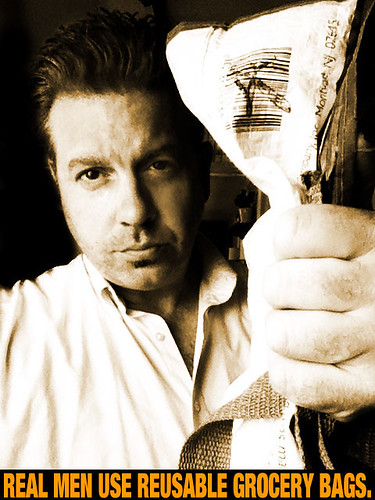
When I am in the grocery stores of the great metropolis of Washington, DC., I notice that the majority of shoppers are using some kind of reusable bag, or at least, they have brought a plastic bag with them and are using it anew.
What's the difference? In January 2010, Washington, DC passed a "Bag Law". The law, the first of its kind in the U.S., requires any District business selling food or alcohol to charge 5 cents for each disposable paper or plastic carryout bag. The business keeps 1 cent (or 2 cents if it offers a rebate when customers bring their own bag), and the remaining 3 or 4 cents goes to the new Anacostia River Protection Fund.
Though controversial when it was passed, almost immediately, businesses began seeing a drastic reduction in bag usage, and environmental clean-up groups witnessed fewer bags polluting DC waterways.
Personally, I think the law is brilliant and I'm happy to do my part. Reusable grocery bags are affordable and easily found in practically every city in the country. The Great Atlantic & Pacific Tea Co. offers incredible bags created specifically for The Elizabeth Haub Foundation which are distributed exclusively through the A&P Family of Supermarkets. I'm holding one in my hand in the photo above. I own about 10 of them in total. They are available for a mere 99 cents!
The bags are incredible! Not only do they easily hold at least 10 times the amount of groceries that the useless plastic bags hold, they are amazingly strong and durable, easily hand washable, and portable with extra sturdy and flexible double-grasp nylon handles. And, artistically speaking, they are also absolutely beautiful as each different bag features a stunning wild-life themed photograph in rich, vibrant color.
Why do I have 10 of these beauties? Because I use these bags for far more than just hauling groceries. I can fill them with art supplies, CDs, books, clothing and much more which makes transporting such items a breeze as I travel back and forth between destinations.
Though made in China (which admitedly doesn't fill my heart with joy), they are made from 100% post consumer recycled content. Better yet, a portion of the 99 cent purchase price goes to The Elizabeth Haub Foundation, an organization that works to support the development and implementation of necessary legislative provisions for the conservation and sustainable use of nature, as well as for humankind.
It's frustrating to me that I have seen so many Delawareans leaving the grocery stores with plastic bag after bag. Can they not get their head together about how harmful plastic bags are to the environment (especially here at the shore!) and how there are much better options so easily available. Perhaps they need an incentive. Why not a "Bag Tax" for the Delaware shore - perhaps nation wide!
Because in case you don't know by now, plastic bags are for losers.